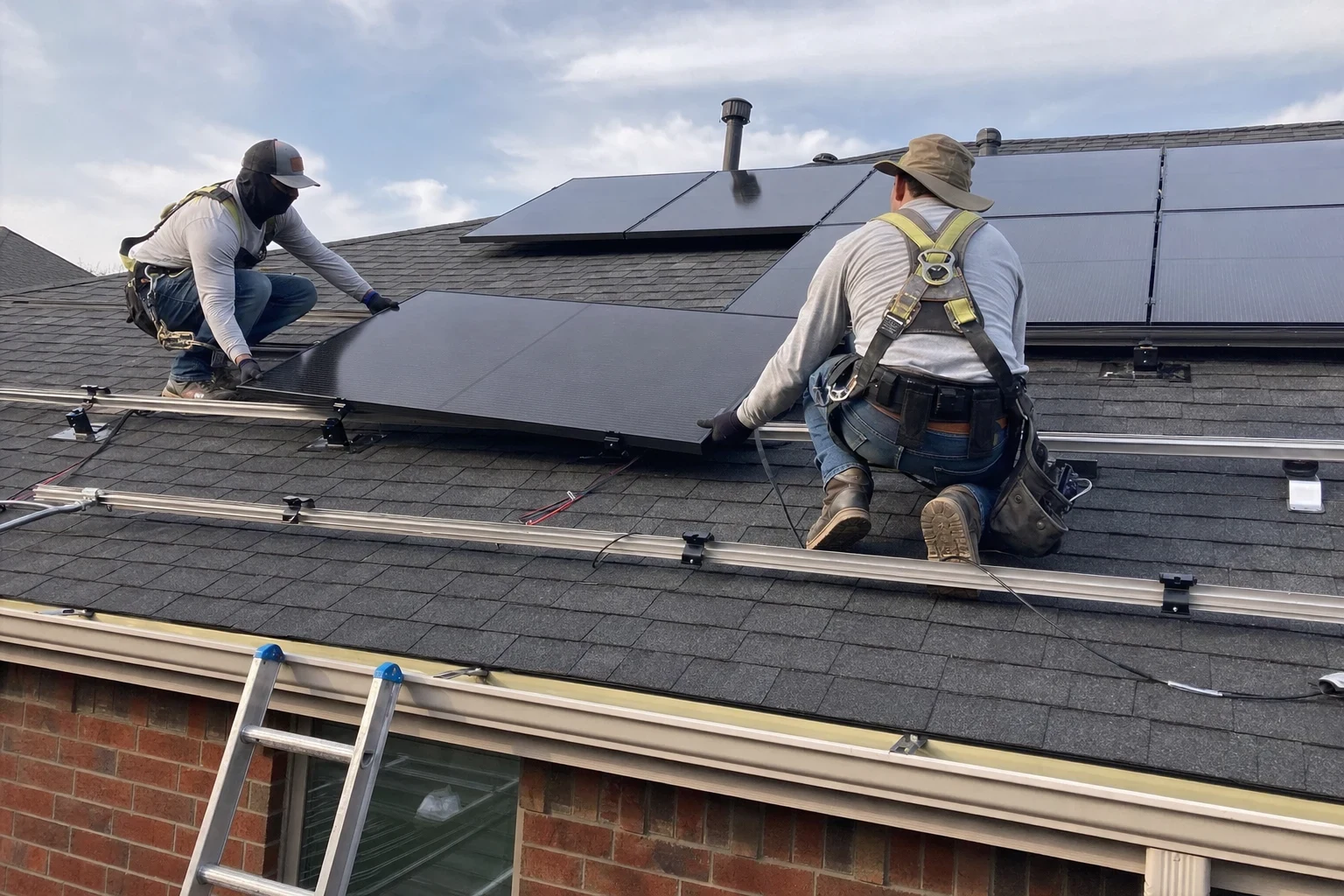
Dallas Solar Installation, Explained Before You Choose
We plan and install home solar panels, add battery storage, fix systems that quit producing and clean panels that dust and pollen have dimmed. Each part we suggest comes with a plain explanation of its job and why it suits your home. Our crews cover Dallas, Irving and Richardson.
- Plain-English proposals
- Line-item written estimates
- Photos of what we find
- Honest repair-or-replace answers
About Solar Installation Dallas
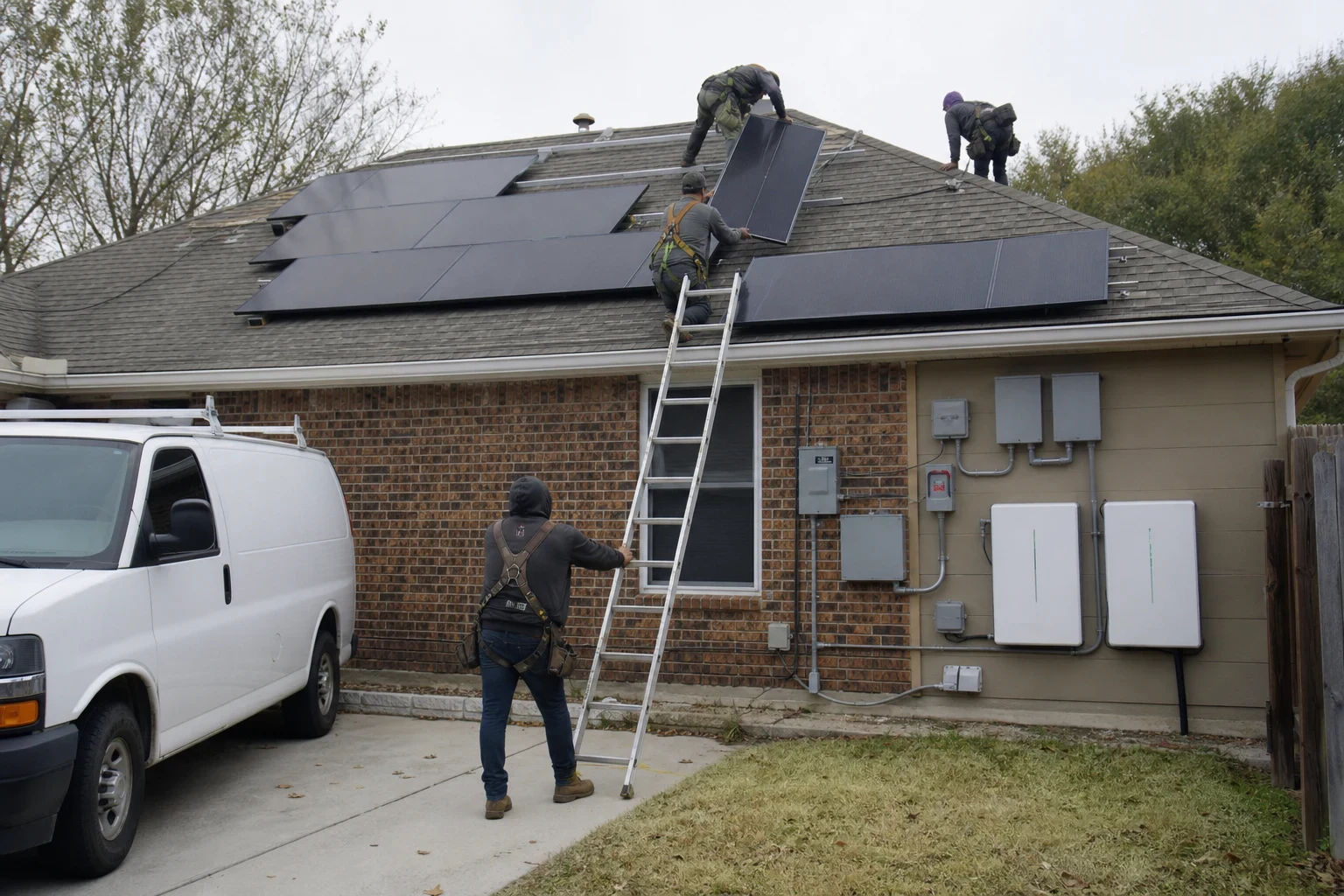
We are a solar company based here, working on houses throughout Dallas and the cities around it. We put in new systems, add batteries, track down problems in existing setups and handle regular cleaning. We also work on systems other companies put in, even when that first installer has gone out of business.
Our approach grew out of something we kept seeing: most solar buyers are pushed to sign before they know what they are paying for. We would sooner take another thirty minutes to explain why a particular inverter fits or why covering your east roof would not pay off. Owners who understand their system look after it better and believe the numbers.
- In business
- In business 5 years
- Warranty
- 10-year workmanship warranty on solar
Solar Services for Your Home
We handle solar panel installation, roof-mounted solar, battery storage, solar repair and panel cleaning. Each service page covers the parts involved, what tends to go wrong and what changes the price. If you already have a system that is underperforming, start with solar repair. If you are starting from scratch, solar panel installation walks you through the whole design.
Solar Panel Installation
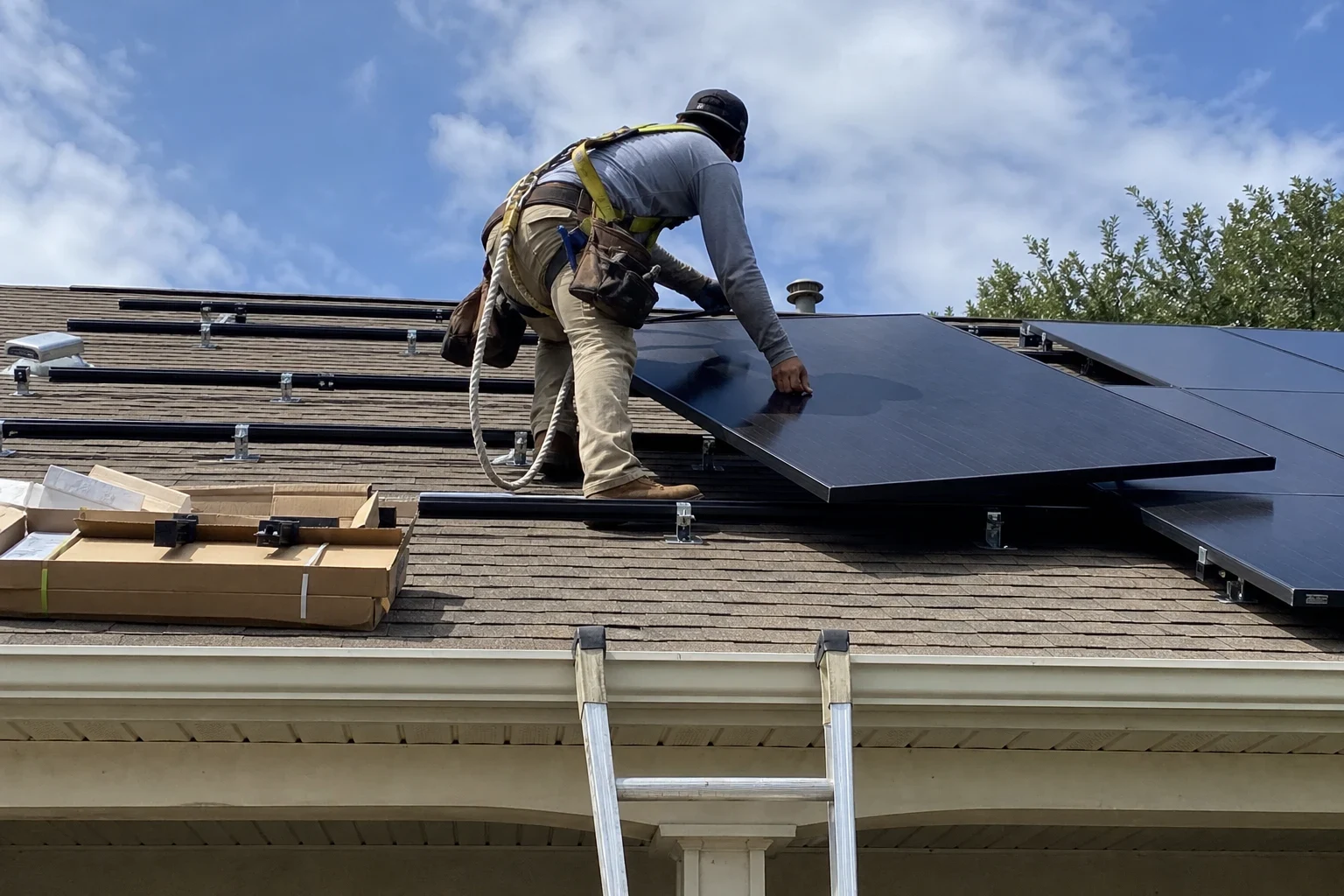
We size, permit and install a solar system on your home, then walk you through every part, from the modules and inverter to the utility meter swap.
Battery Storage
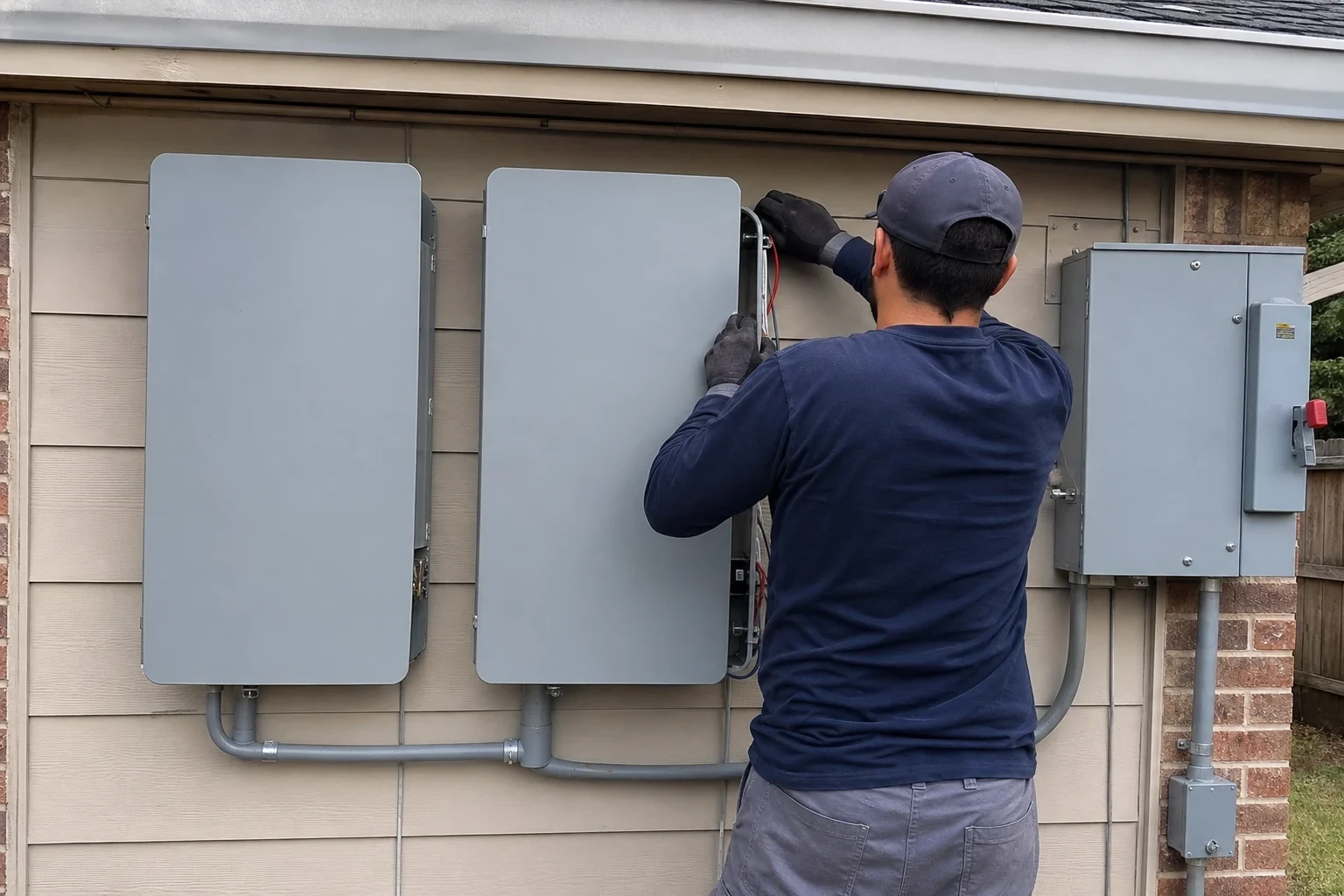
Home battery storage paired with solar, sized from your real loads so you know what stays on during an outage and what does not.
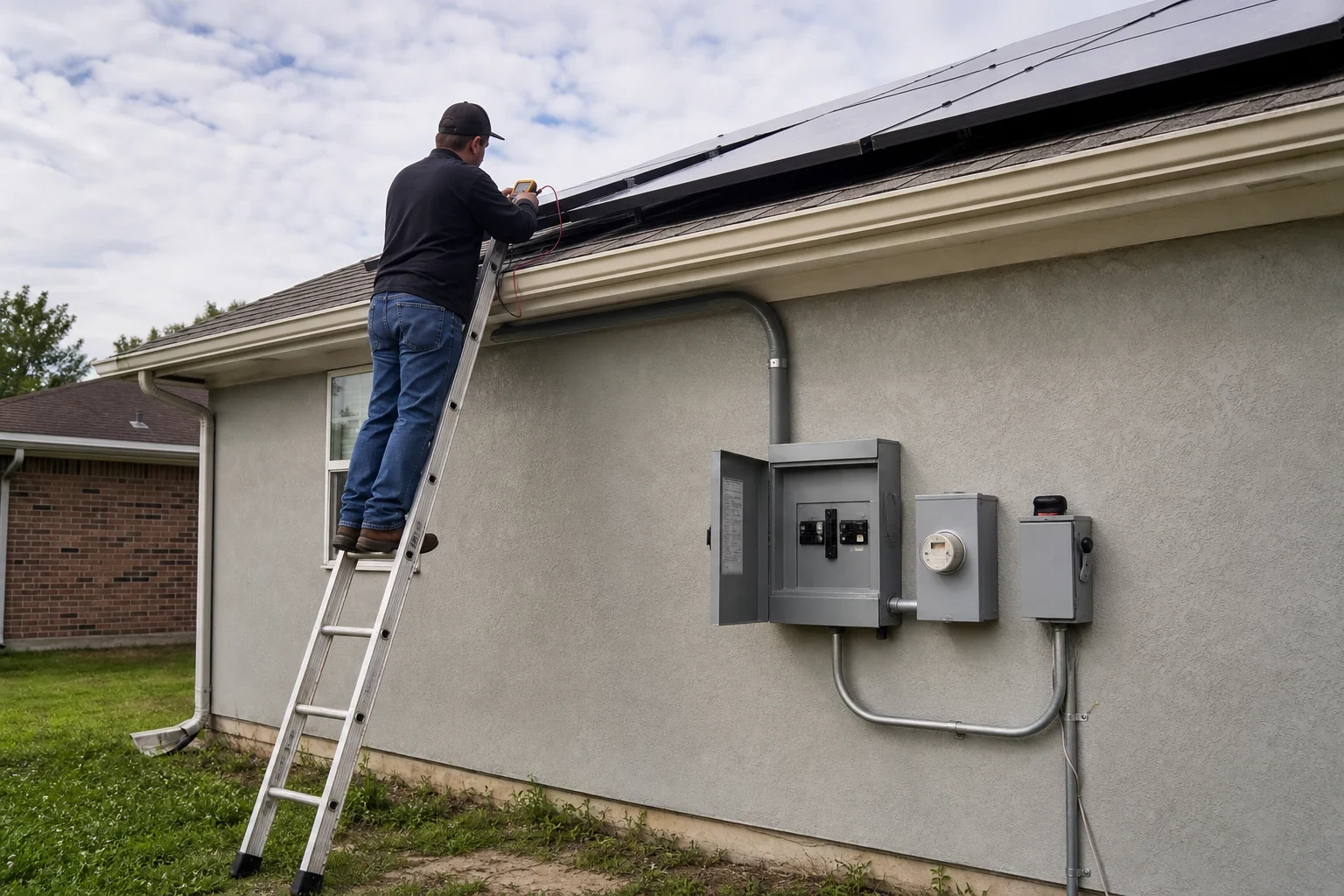
Solar Repair
We trace inverter errors, damaged wiring and weak panels to the real cause, then explain your repair options before any work starts.
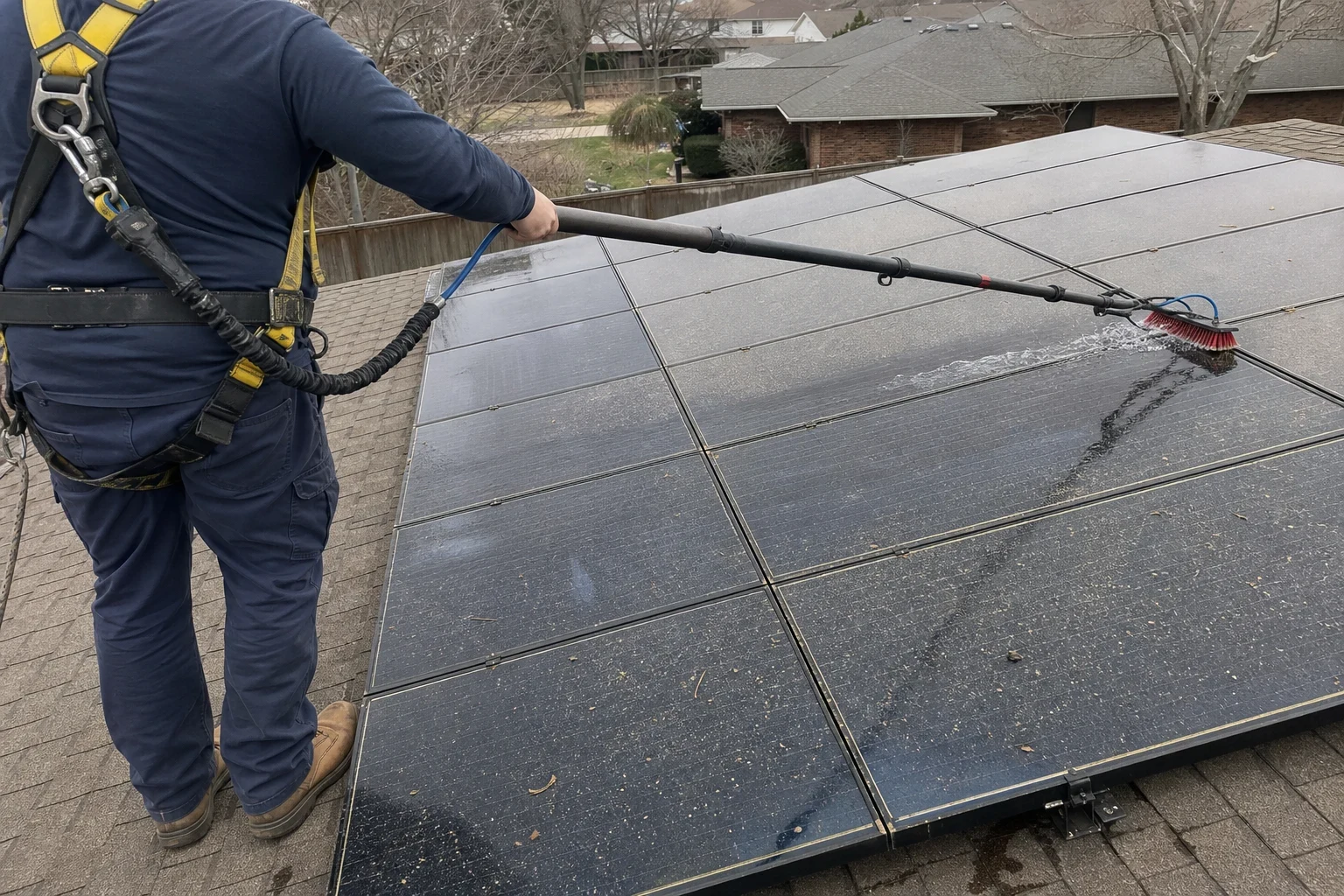
Panel Cleaning
Purified-water, soft-brush cleaning that removes dust, pollen and bird droppings without scratching the glass coating, with a visual check of the array.
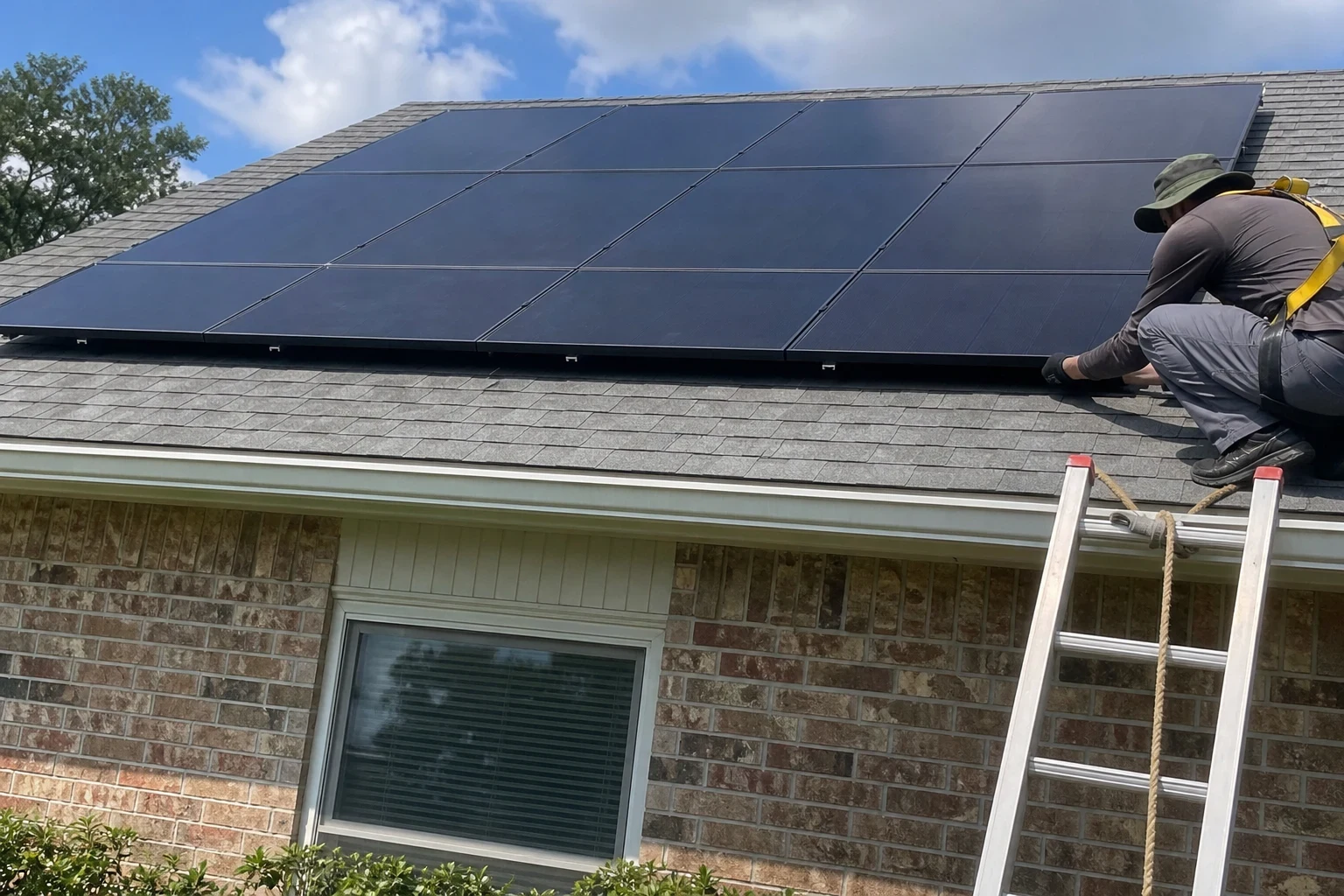
Roof-Mounted Solar
How panels attach to your roof, what keeps each penetration watertight, and how we decide which roof planes are worth using.
From First Call to Turn-On
Homeowners often ask what takes place between calling us and seeing the system switch on. Here is each stage.
- 1
Opening call
Share a bit about your house, your power bills and what you hope solar will do. We cover your first questions and book a visit.
- 2
Visit to your home
We measure each roof plane, track how shade shifts across the seasons, inspect the decking and shingles under the planned array, and open your main panel to note its rating and open slots. If the roof needs repair before panels go on, you hear it from us first.
- 3
Drawing and line-item estimate
We hand you a drawing that places each panel, a list of the equipment and a yearly production estimate. Then we go through it together and answer questions on every option you are considering.
- 4
Permits first, then installation
After permits are approved, we set the racking, panels, inverter and disconnects. Each roof attachment gets flashing and a seal. On most homes the on-site work takes one to three days.
- 5
Inspection and switch-on
Once the city inspector signs off and the utility gives approval, we turn the system on, connect monitoring to your phone and show you how to read it.
What Moves the Price of Solar
Two systems rated at the same kilowatts can come in at very different prices. The gap usually traces back to the roof, the electrical panel and the equipment picked. Below is what we check and why it counts.
After we look at your roof, electrical panel and utility bills, you get an itemized written estimate. We go over the quote by phone and on paper, and we do not give a price until we have seen the real conditions.
- System size and your usage
- System size is counted in kilowatts of panels and follows the kilowatt-hours your home uses in a year. Larger systems cost more in total but often less for each watt.
- Roof layout and shading
- An open south or west roof plane with no shade is the simplest to build on. Hips, valleys, vents, skylights and shade from trees split the array into smaller sections, adding racking and labor and sometimes optimizers or microinverters.
- Inverter type
- One string inverter is cheaper at the start. Microinverters or optimizers at each panel cost more, but they stop one shaded or dirty panel from pulling down the rest, and they show you how each panel is doing.
- Your main electrical panel
- Some older 100-amp or full panels cannot take the power a solar system feeds back. Upgrading the panel or using a supply-side connection adds cost, and we let you know early if that applies to you.
- Battery capacity
- A battery's price rises with its usable kilowatt-hours and with whether it covers the whole house or a smaller panel of essential circuits.
- Permits and interconnection
- Each system needs city building and electrical permits and utility approval to connect. Rules differ between Dallas and nearby cities, which changes the paperwork and the schedule.
Where We Install and Service Solar
We work throughout Dallas and nearby cities including University Park, Highland Park, Cockrell Hill, Irving, Garland, Mesquite and Richardson. To the south we serve Lancaster and Duncanville, and to the northwest Farmers Branch. Each city runs its own permit and inspection process, and we handle that paperwork for you.
- Dallas
- University Park
- Highland Park
- Cockrell Hill
- Irving
- Garland
- Mesquite
- Richardson
- Lancaster
- Duncanville
- Farmers Branch
If your city is not listed, ask when we talk. We will tell you directly whether we can take the job.
Common Solar Questions
Something not covered here? (972) 573-4503
Will solar panels cause roof leaks?
Not when they are installed correctly. Every mount is lag-bolted into a rafter rather than only the decking, and flashing goes over it so water runs past the bolt. We also look at how old your shingles are and what shape they are in, since panels on a roof due for replacement have to be removed and reset later.
Do I need a battery with solar?
No. A standard grid-tied system runs fine without one. Storage is worth a look if you want power during outages or your electric plan pays little for the power you export. We model both options on your real usage so you can compare them.
Will my panels keep working in a power outage?
Only if you have a battery. Grid-tied inverters must shut down when the grid fails so they do not push power onto lines that utility crews are repairing. With a battery and transfer switch, storage and solar keep your home running.
How do panels hold up to hail?
Panel glass is tempered and goes through impact testing for certification, so ordinary hail seldom damages it. Very large stones can crack it, which shows up as lower output from that panel. After a storm we can inspect the array and record any damage for your insurance claim, but your adjuster decides on coverage.
Do you warranty your work?
Yes. We give a 10-year workmanship warranty on solar. Panels and inverters come with separate manufacturer warranties, and we show you what each one covers.
Can you fix a system another company installed?
Yes. We find and fix problems no matter who put the system in. Typical issues are failed inverters, damaged wiring, loose connectors and monitoring that quit reporting, and we show you photos of the problem before suggesting a repair.
How often should panels be cleaned?
That depends on dust, pollen, nearby trees and how much rain falls in a season. Buildup can cut output noticeably, most of all on low-slope roofs where rain does not wash panels clean. Your monitoring app tells you best: a steady dip on sunny days usually means a cleaning is due.
Why Homeowners Work With Us
Solar involves a lot of jargon: kW versus kWh, string inverters, net metering, rapid shutdown. We translate it so you can compare options on your own terms.
- 01
We explain every line of the proposal
Your estimate lists panel model and wattage, inverter type, racking, conduit runs and any electrical upgrades as separate items. We tell you what each one does and why we chose it, so a lower bid from someone else can be compared part for part.
- 02
Production numbers based on your roof
We size the system from your past twelve months of usage and the actual pitch, orientation and shading of your roof planes. A west-facing array produces differently than a south-facing one, and we show you that difference instead of quoting a best-case figure.
- 03
Batteries only when they make sense
A battery adds cost and is not right for every home. We show you what it does during an outage, how its usable capacity compares to your essential loads, and when skipping it is the smarter call.
- 04
Photos and a straight answer on repairs
When a system underperforms, we trace the cause, whether a failed optimizer, a tripped breaker, a loose MC4 connector or a dead inverter, and photograph it. Then we tell you plainly whether a repair or a replacement is the better spend.
- 05
Clean, careful work on site
We protect landscaping and walkways, keep wiring in tidy conduit runs and haul away packaging and scrap at the end of each day.
Get Your Solar Questions Answered
Tell us about your home and your electric bills, and we will lay out what a system would look like, what it would involve and whether it makes sense for you. Your quote is given by phone and in writing after we see the site.