ServicesRoof-Mounted Solar
Roof-Mounted Solar in Dallas
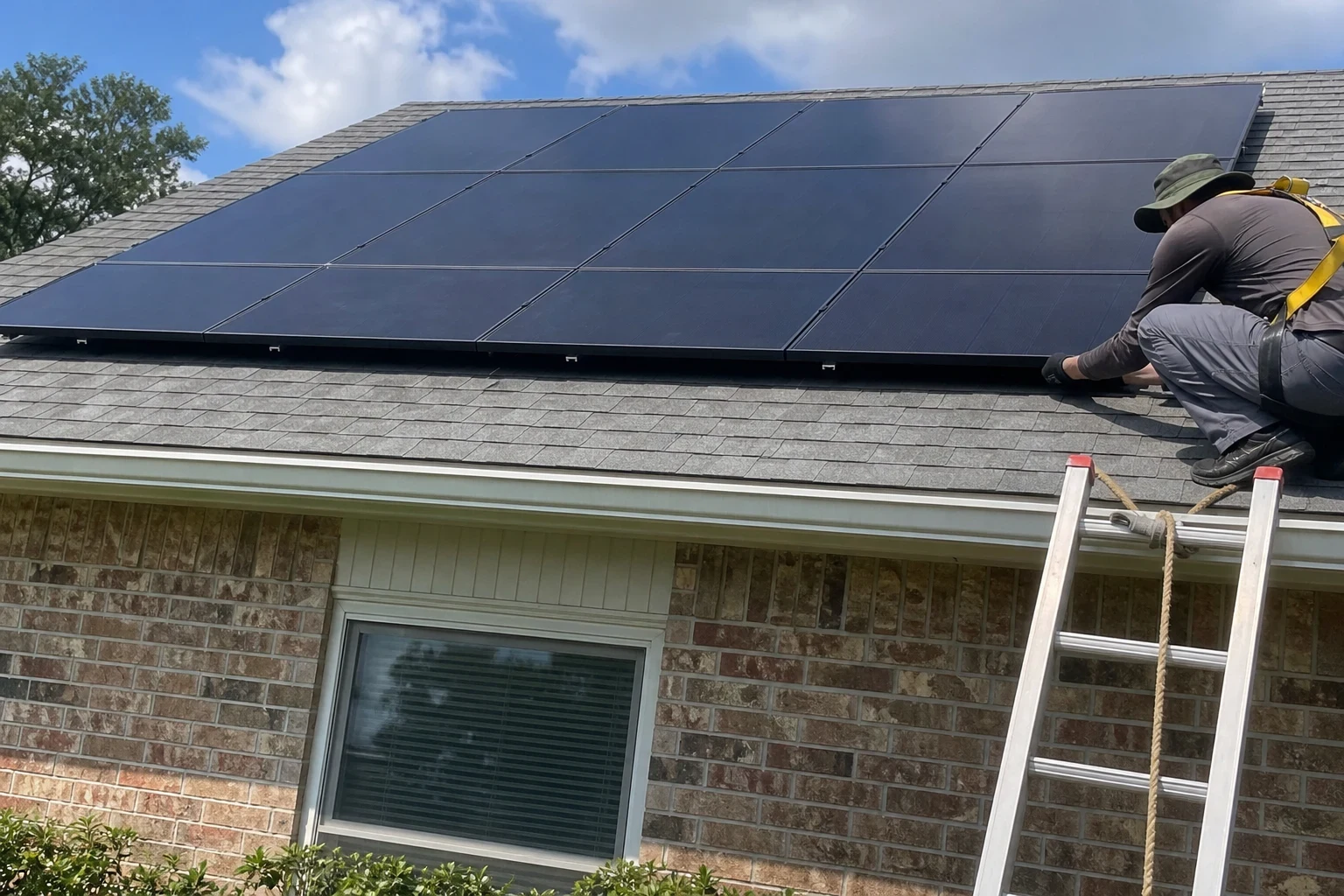
Most solar arrays sit on the roof, and the parts you never see decide how well they last. We explain the mounts, flashing, rails and wiring in plain terms, show you the layout before work starts, and build it to stay dry and tight.
What roof-mounted solar actually is
A roof-mounted system is panels clamped to aluminum rails, and rails fastened to your roof through attachments that land in the rafters or trusses. Every attachment is a hole in the roof, so each one needs flashing or a sealed base that sheds water the way your shingles do.
It is the right choice for most homes because the roof is already there, it is usually the sunniest surface you own, and it keeps the yard free. It is the wrong choice when the shingles are near the end of their life, because the panels would have to come off when the roof is replaced. We check that first and tell you honestly, and if the roof needs work, that is a job for your roofer before we start. Our full process for new systems is on the Solar Panel Installation page; this page covers the roof side of it.
What the work includes
Attic and rafter check
We confirm rafter size, spacing and condition so every lag bolt bites into solid framing, not just decking. Sagging, cracked or water-stained framing gets photographed and discussed before anything is designed.
Flashed attachments
Each mount sits under a metal flash or uses a sealed base rated for your roofing material, with sealant under the bolt head as a backup, not the main defense. On composition shingle, the flashing slides under the course above so water runs over it.
Rail and panel layout
We place panels to keep the fire code setbacks from ridges and edges, avoid vents and plumbing stacks, and keep strings on planes with matching sun exposure. You see the drawing before we order equipment.
Wire management and conduit
Module leads are clipped to the rails so they never rest on the shingles, where heat and abrasion wear the jacket. Runs off the roof go through a sealed pass-through or exterior conduit to the inverter or microinverter combiner.
Grounding the array
Rails and panel frames are electrically tied together and connected to ground, so a fault has a safe path instead of energizing the metal. The inspector checks this, and so do we before the inspection is scheduled.
Workmanship coverage
Our installs carry a 10-year workmanship warranty on solar, which covers the attachments and wiring we put on your roof.
Signs a roof mount is the right fit for your home
Open south or west planes
A plane facing south, or west for late-day production, with few vents and no tall trees nearby is the best real estate for panels.
A roof with years left
If your shingles have plenty of life ahead, panels can stay put for a long stretch. A roof due for replacement soon should be done first.
Little usable yard space
Ground mounts need open land and trenching. Most city lots are better served by the roof.
Questions after other quotes
If a quote did not say how the panels attach, how many penetrations there are, or whether anyone looked in the attic, we can walk you through what those details mean.
How a roof-mounted install runs
- 1
Site visit and measurements
We measure each roof plane, note pitch and material, check shading, and go into the attic to look at framing. You get photos of what we found.
- 2
Layout and permit
We draw the panel layout with setbacks and attachment points, then handle the city permit and the utility interconnection paperwork for you.
- 3
Mounting day
The crew snaps lines, locates rafters, installs flashed attachments and sets the rails level. Panels go on next, then the wiring is clipped and run to the inverter location.
- 4
Inspection and turn-on
The city inspector reviews the work, then the utility approves the connection. We show you how to read the monitoring app before we leave.
What moves the price of a roof mount
Panels are just one piece of the price. Your roof decides how much labor, hardware and time go into the job, and your quote lists each of those separately so you can see where your money goes.
- Roofing material
- Composition shingle is the simplest roof to mount on. Tile and standing-seam metal call for different hardware, and tile takes extra labor to lift and reset.
- Pitch and height
- Steep roofs and two-story homes need more fall protection and a slower pace, which adds crew hours.
- Number of planes
- Spreading panels over several roof faces takes more rail and attachments, and often microinverters or optimizers to deal with uneven sunlight.
- Electrical path
- A long conduit run from the roof down to the panel, or a main panel that must be upgraded before it can take solar, changes the total.
Roof-mounted solar questions
Something not covered here? (972) 573-4503
Will drilling into my roof cause leaks?
A mount with proper flashing sheds water the same way a shingle does. Leaks tend to come from mounts that depend only on sealant or miss the rafter. We flash each attachment and bolt it into framing, and that work is part of the workmanship coverage listed above.
How do the panels handle hail?
Most panels use tempered glass that has been hail-tested, and the rails are fastened to hold against wind lift. Big hail can still break glass, and the Solar Repair page covers how we find and replace damaged panels.
Do I need to replace my roof first?
Only when it is nearly worn out. Taking panels off and putting them back later costs extra, so we tell you what we find during the visit. We do not do roofing, so that job would go to your roofer.
Do the panels make my attic hotter?
No. Panels shade the shingles under them, and the space beneath the rails lets heat out, so that part of the roof usually stays cooler than open roof in summer.
How long has your company been doing this?
We have been in business 5 years and are BBB Accredited, A+ rating. Call us and we are happy to go over roof-mounted jobs we have done.
See how panels would sit on your roof
Tell us about your roof and we will explain the layout, the attachment method and what drives the price before anything is scheduled.