ServicesSolar Panel Installation
Solar Panel Installation in Dallas
We design and install solar systems sized to your actual electric use, then explain each component in plain terms: what the panels, inverter and disconnect do, why we chose them, and what happens between signing and the day your system turns on.
What a solar installation actually includes
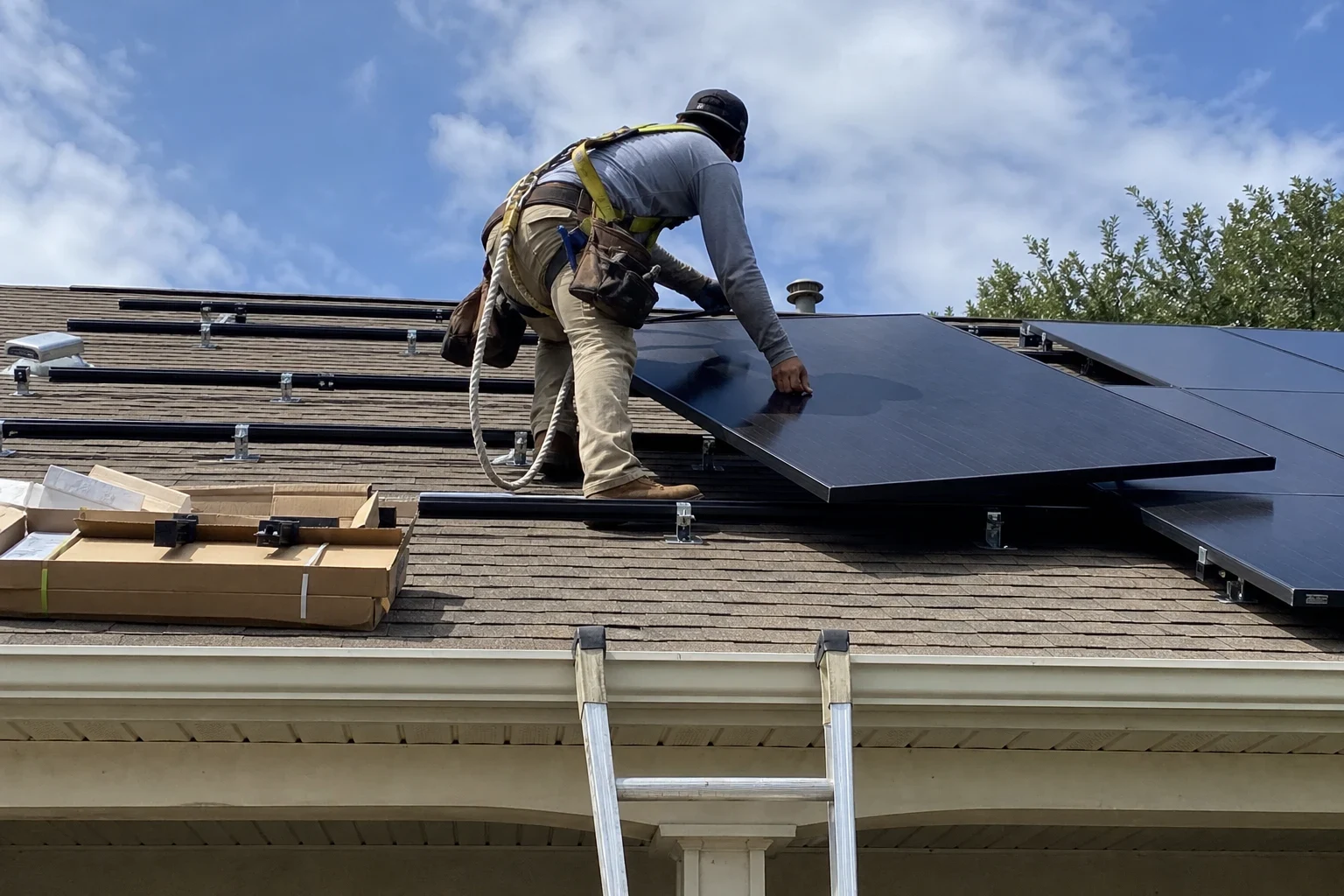
A home solar system is more than panels on a roof. It is a chain of parts: modules that turn sunlight into DC power, an inverter that converts it to the AC power your home uses, racking that holds everything in place, and the wiring, breakers and disconnects that tie it safely into your electrical panel. Each link affects how much power you get and how long the system lasts.
Our job is to pick the right part for each link and tell you why. Many quotes list a brand name and a kilowatt number and stop there. We show you the reasoning: how many panels your roof can hold, which direction they face, and what that means for production on your bills.
Solar Installation Dallas has been in business 5 years, and every system we install carries our 10-year workmanship warranty on solar.
What's part of the job
- Sizing from your actual usage
- We work from a year of your electric bills instead of an estimate. Matching the system to the kilowatt-hours you really use means you do not pay for capacity your home will not use.
- Choosing panels and inverters
- We walk you through the options: one string inverter, a microinverter on each panel, or power optimizers. Microinverters and optimizers stop a shaded panel from pulling down the others; a string inverter is cheaper and does well on an unshaded roof facing one direction.
- Rails and roof mounts
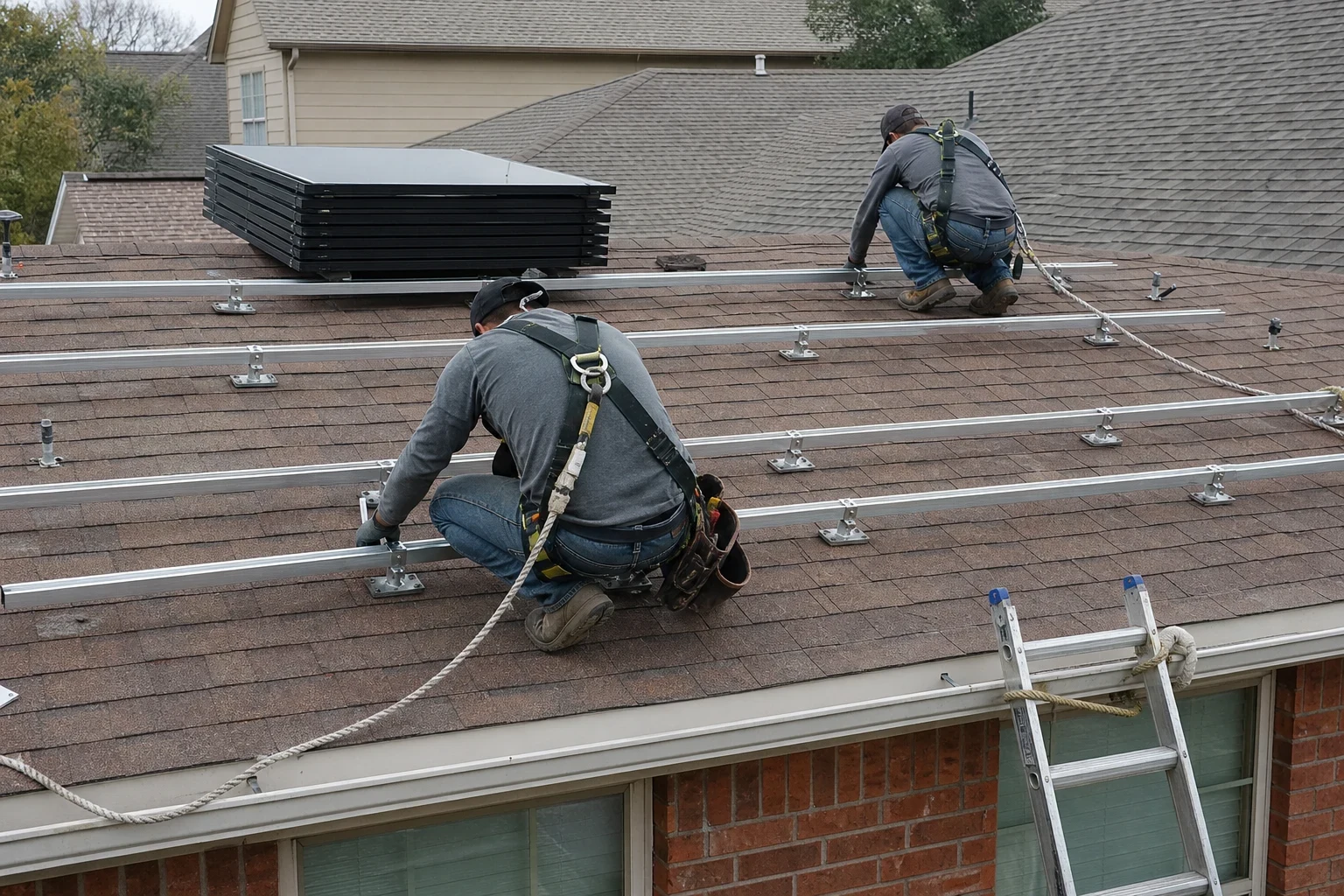
- Rails are anchored into rafters rather than only the decking, and every hole is flashed and sealed so water runs around the mount. Our Roof-Mounted Solar page covers the details for each roof type.
- Connecting to your panel
- We confirm your main service panel can safely take power back from solar. If its busbar rating falls short, you hear that from us before work begins, not afterward.
- Permits and utility forms
- We obtain the electrical and building permits and file the interconnection application with your utility, so the system is legally allowed to send power to the grid.
Signs solar makes sense for your home
Your summer bills are the biggest
If July and August bills run well above spring, solar production matches your heaviest months. Panels make the most power on long, bright days, which is exactly when your air conditioner works hardest.
Open roof faces to the south or west
Panels facing south produce the most across a whole day. Panels facing west produce later in the afternoon, which can still pay off if your use peaks in the evening.
A roof that still has years left
Panels usually stay in place for decades. If your shingles are close to worn out, it is generally better to have a roofer replace them first so the array does not have to come off and go back on.
You expect to stay put
Solar pays for itself gradually through lower bills. The longer you live in the house, the more of those savings stay with you.
What moves the price of a solar system
Two homes with the same number of panels can have very different quotes. The difference usually comes from equipment choices, roof layout and the condition of your electrical service. We break these out line by line so you can see where the money goes.
System size
Measured in kilowatts, size follows your electric use. More panels mean more modules, racking and labor.
Inverter type
Microinverters and optimizers cost more up front than a single string inverter but help on shaded or multi-direction roofs.
Roof complexity
Steep pitches, several small planes, or tile roofing take more time and specialized mounts than a simple single-slope composition roof.
Electrical panel upgrades
An older or undersized main panel may need a busbar upgrade or a supply-side connection before solar can be added safely.
Add-ons
Pairing panels with a home battery changes the design and the price. Our Battery Storage page explains when that is worth it.
How the install runs, start to finish
- 1
Site visit and measurements
We measure roof planes, check shading from trees and nearby structures, look at rafter spacing in the attic, and photograph your electrical panel.
- 2
Design and written proposal
You get a panel layout, an estimate of yearly production, and a line-item breakdown of equipment and labor. We go through it with you so every number makes sense.
- 3
Permitting
We prepare the plan set and take it through review with the city or town that covers your address. Dallas and nearby cities like Richardson and Garland each review solar plans their own way, and we handle that back-and-forth for you.
- 4
Installation day
Most homes take one to three days on site. We mount racking, set panels, run conduit to the inverter and disconnect, and clean up wire scraps and packaging before we leave.
- 5
Inspection and turn-on
After the inspector signs off, the utility approves interconnection and may swap your meter. Only then do we switch the system on and show you how to read its production data.
Solar installation questions we hear most
How will Texas hail affect my panels?
Quality modules are built with tempered glass and are impact tested during certification. Severe hail can still crack glass, so we suggest checking whether your homeowner's policy covers the array. If damage happens, our Solar Repair service can test and replace affected panels.
Do panels work well in Dallas summer heat?
Yes, though output dips slightly as cells get hotter. Every module has a temperature coefficient on its spec sheet, and we choose panels with a lower one and leave airflow space under the array to help them run cooler.
What happens to extra power my system makes?
It flows back to the grid through your meter. How you are credited depends on your retail electric plan, since buyback rates vary between providers. We explain what to look for in a plan before your system turns on.
What does your warranty cover?
Our 10-year workmanship warranty on solar covers the quality of our installation: the mounts, flashing, wiring and connections we put in. Panels and inverters also carry separate manufacturer warranties, and we show you which document covers which part.
How can I compare your quote with others?
Ask every installer for the same details: panel model, inverter type, system size in kilowatts and estimated yearly production. Our proposals list each of those as its own line, along with labor and permit work, so you can line them up side by side. If another quote leaves something out, we can explain what that missing line usually means.
Get a solar plan you actually understand
Tell us about your home and your electric bills, and we will explain what size system fits, which equipment we would use and why. Your quote comes by phone, with time for every question.