ServicesPanel Cleaning
Dallas Solar Panel Cleaning
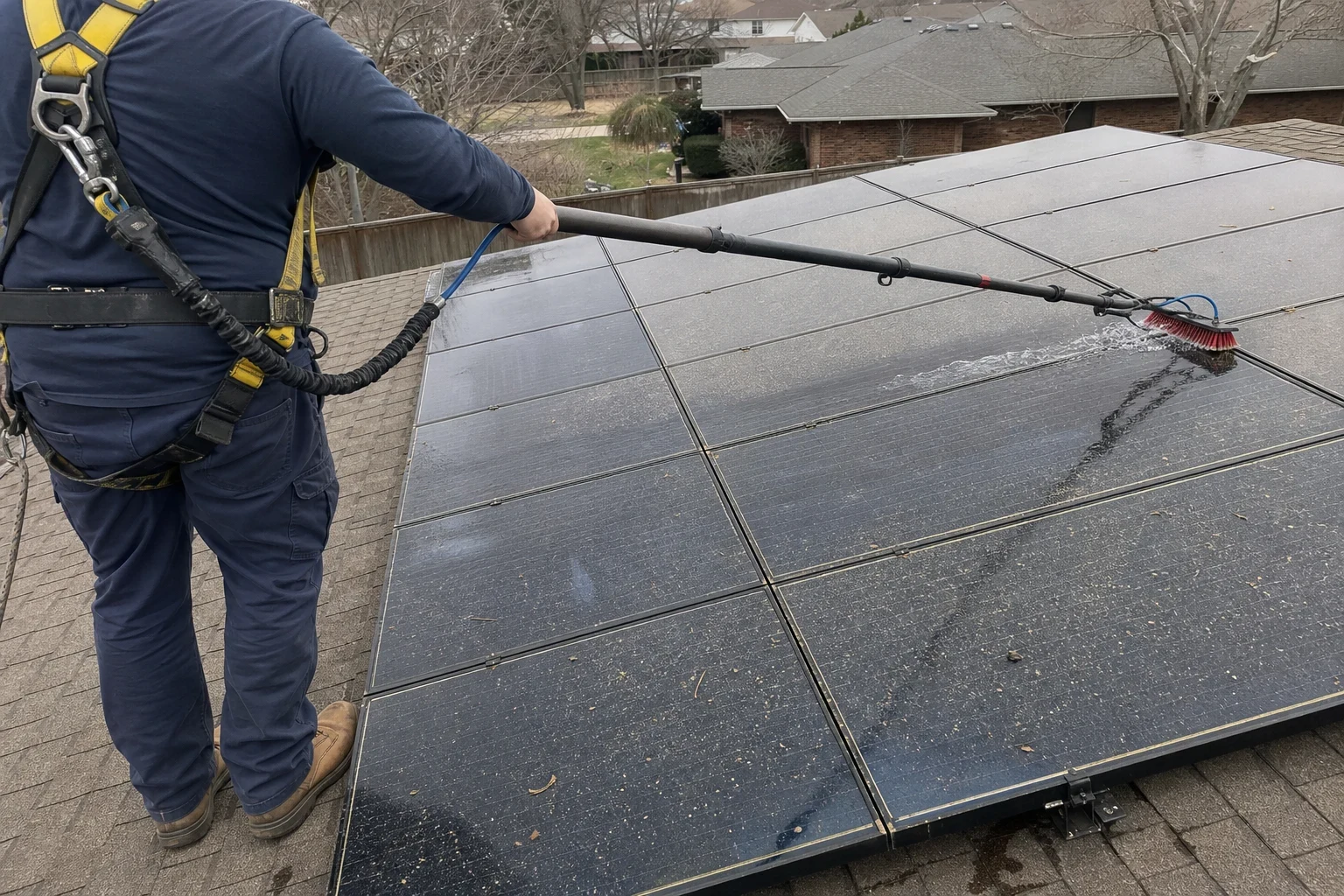
Dust, pollen and bird droppings leave a film on your panels that keeps light out and lowers output. We clean the glass with purified water and soft brushes, look over the array while we are on the roof, and tell you what we saw in plain words.
What Panel Cleaning Does and When It Pays Off
A solar cell only produces power from the light that reaches it. A thin layer of grime on the tempered glass scatters and absorbs some of that light, so the whole panel produces less. Bird droppings are worse. They shade a few cells completely, and because cells in a panel are wired in series, one shaded cell can pull down the output of the cells around it.
Rain helps, but it doesn't finish the job. Most residential panels sit at a low tilt, so water runs off slowly and leaves dried dust lines along the bottom edge of the frame. Around Dallas, spring pollen and long dry summers mean residue often builds faster than storms can wash it off. A cleaning makes sense when your monitoring app shows a drop that weather doesn't explain, or when you can see film or droppings from the ground.
After 5 years in business, we've learned that a good cleaning visit comes down to three things: clean glass, no damage, and a clear explanation of what we saw. We're also BBB Accredited with an A+ rating, and we treat every roof we step onto with that standard in mind.
What Our Cleaning Includes
- Purified water rinse
- We wash with deionized water rather than plain tap water. Dallas tap water holds dissolved minerals that dry as white spots on the glass, and those spots block light just like dirt. Purified water dries spotless with no detergent.
- Soft-bristle brushes only
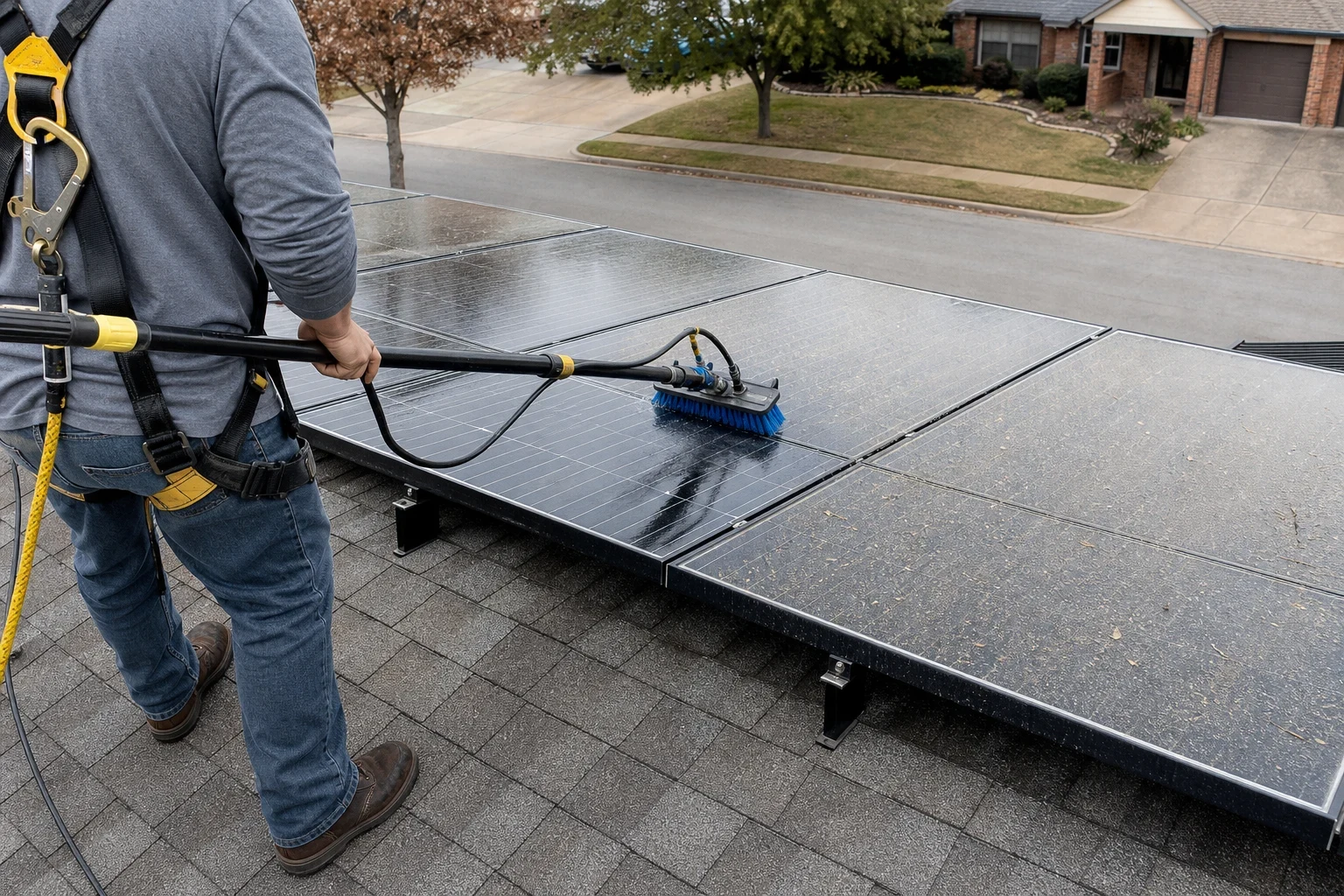
- Panel glass carries a thin anti-reflective coating that helps it take in light. Pressure washers, scouring pads and strong cleaners can strip that coating and may go against a manufacturer warranty, so we never use any of them.
- Spot treatment for droppings
- Hardened bird droppings are soaked before we lift them off with a soft brush. Scraping dry droppings from dry glass is what causes scratches.
- Visual check of the array
- As we clean, we watch for cracked glass, discolored cells, loose or drooping wires beneath the panels, and nests. Anything that needs your attention gets photographed.
- Before and after notes
- You get a brief summary of how the panels looked, what we cleaned and what is worth keeping an eye on. If a repair is needed, we explain the issue and refer you to our solar repair service.
Signs Your Panels Are Due for a Cleaning
Output dropped on clear days
Compare sunny days in your monitoring app month to month. A steady decline that doesn't track with shorter days or cloud cover often points to soiling.
Visible film or haze
If the glass looks dull or grayish from the yard, there's enough residue to matter.
Bird droppings on the glass
Even a few spots can shade individual cells. These rarely rinse off in rain once they've dried in the sun.
Dirt lines along the lower edge
A brown band where the glass meets the bottom of the frame means rainwater is pooling and drying there, leaving its dirt behind.
Recent construction or a dry spell
Nearby building work, a dusty summer or a heavy pollen season can coat panels quickly.
What Goes Into a Cleaning Quote
Every cleaning is priced on its own rather than at a single flat rate for all homes. The two biggest factors are how many panels you have and how safely we can reach them. We cover each factor during the call so you know the price before we arrive.
Panel count
A bigger array uses more water, more brush work and more time on the roof.
Height and slope of the roof
Steep roofs and two-story houses take more setup and fall protection. Single-story homes with gentle slopes are quicker.
Amount of buildup
Light dust rinses away fast. Heavy droppings, sun-baked pollen or lichen have to soak and need slower brushing.
How the panels are laid out
Arrays split across several roof faces, or tucked behind chimneys and vents, are slower to reach than one continuous row.
What Happens on Cleaning Day
- 1
Start with a call
Let us know your panel count, whether your home is one or two stories and what you have noticed. You get a quote over the phone and a scheduled time.
- 2
Cool-hour timing
We clean early in the day or toward evening while the glass is cool. Water on panels that have baked in summer sun can stress the glass, and hot panels dry so fast they streak.
- 3
Wet, scrub, final rinse
The panels get wetted down and brushed with soft bristles, tough spots get extra attention, and a last purified-water rinse leaves them to air-dry.
- 4
Photos and review
We go over before and after photos with you, point out anything we noticed on the array and say whether it needs attention now or can wait.
Panel Cleaning Questions
How often should my solar panels be cleaned?
Most homes need it once or twice a year. Late spring, once pollen season ends, works well, plus late summer if the weather has been dry and dusty. Your monitoring numbers are the best guide; if output stays steady, there is no reason to clean more often.
Can I just hose them off myself?
A hose aimed from the ground can rinse off loose dust, but tap water leaves mineral spots and will not lift droppings. Going up on the roof with a hose and brush is dangerous. Do not use a pressure washer, because it can harm the glass coating and the frame seals.
Will cleaning affect my panel warranty?
Not when it is done right. Many manufacturers exclude damage from abrasive tools or strong chemicals, so we stick to soft brushes and purified water. On systems we installed, our 10-year workmanship warranty on solar covers our installation work.
How much more power will I get after a cleaning?
That depends on how dirty they were. Light dust may change little, while heavy droppings or baked-on grime can make a clear difference. Watch your monitoring app for a week before and after to see the change on your own system.
Do you need to shut the system off?
We work safely around the array and its wiring, and we tell you on the call if anything at your home has to be turned off. Panels are made to take water on the glass, so a regular cleaning needs no electrical work.
Get Your Panels Back to Full Light
Tell us how many panels you have and what you're seeing in your production numbers. We'll quote the cleaning by phone and set a cool-hour time that works for you.