ServicesSolar Repair
Solar Repair in Dallas
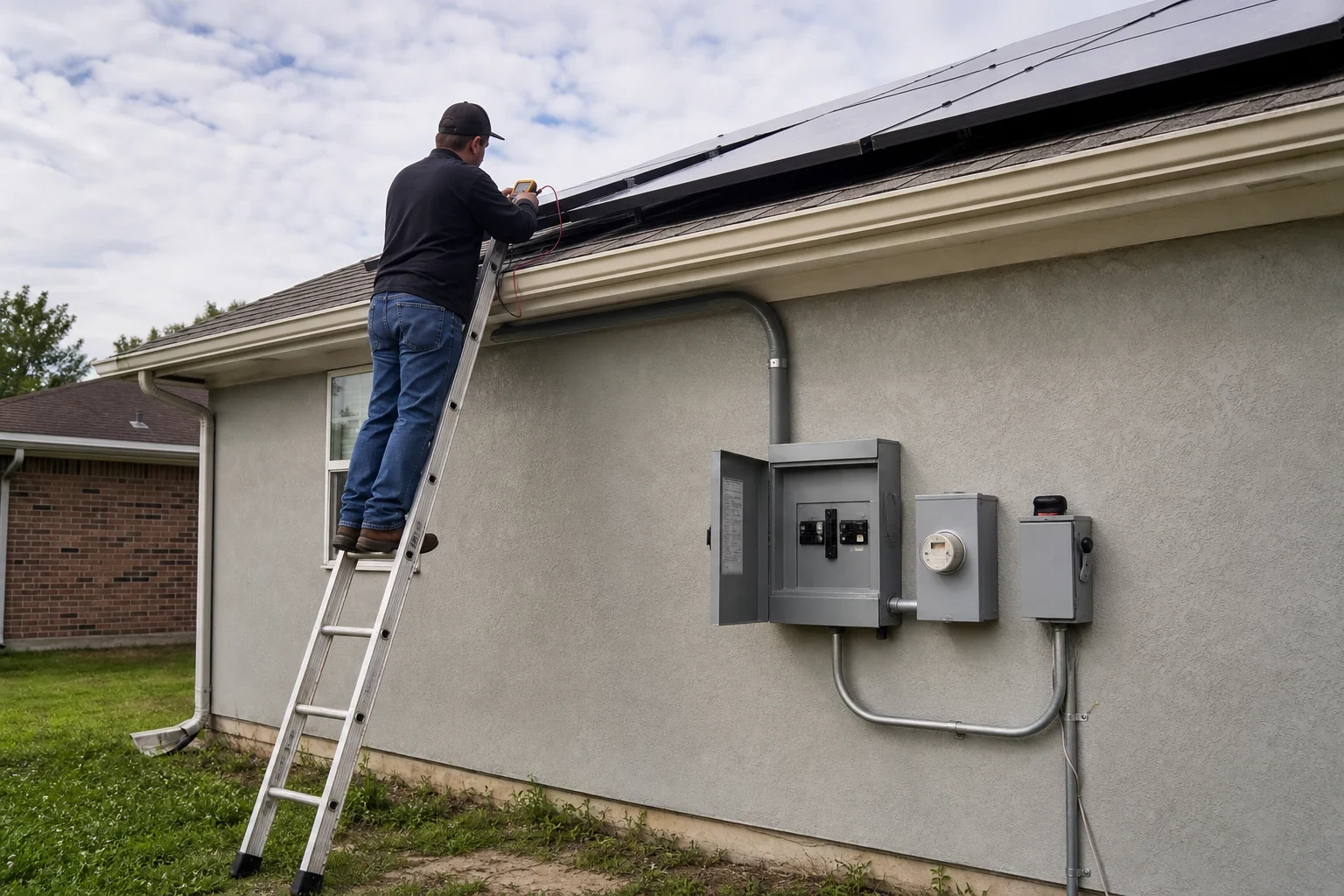
When your system's production drops or the inverter shows an error, we find the specific part that failed and explain why it failed. You get a clear answer on what to fix, what can wait and what it will cost before we touch anything.
Solar repair, explained simply
Think of a solar system as a series of links. Panels make DC power, wiring and connectors carry it, and the inverter turns it into the AC power your home uses. When any link fails, production drops or quits. A real repair finds the failed link and fixes it, instead of swapping parts until the readings look better.
Nearly every problem we see falls into a few groups. Inverters wear out ahead of panels. MC4 connectors loosen or corrode. Squirrels chew through cable jackets under the array. Hail cracks the glass and lets moisture reach the cells. Each one leaves its own pattern in your monitoring app, and we will show you what to look for.
We have 5 years in business and are BBB Accredited with an A+ rating. Our repair visits follow a plain routine: you see photos of the problem, and we tell you whether a fix or a replacement is the smarter spend.
What a repair visit includes
- Inverter diagnosis
- We pull the error codes and event history from string inverters, microinverters and optimizers. Codes such as a ground fault or isolation error often point to wiring trouble upstream rather than a bad inverter, so we test first before suggesting a replacement.
- String and connector testing
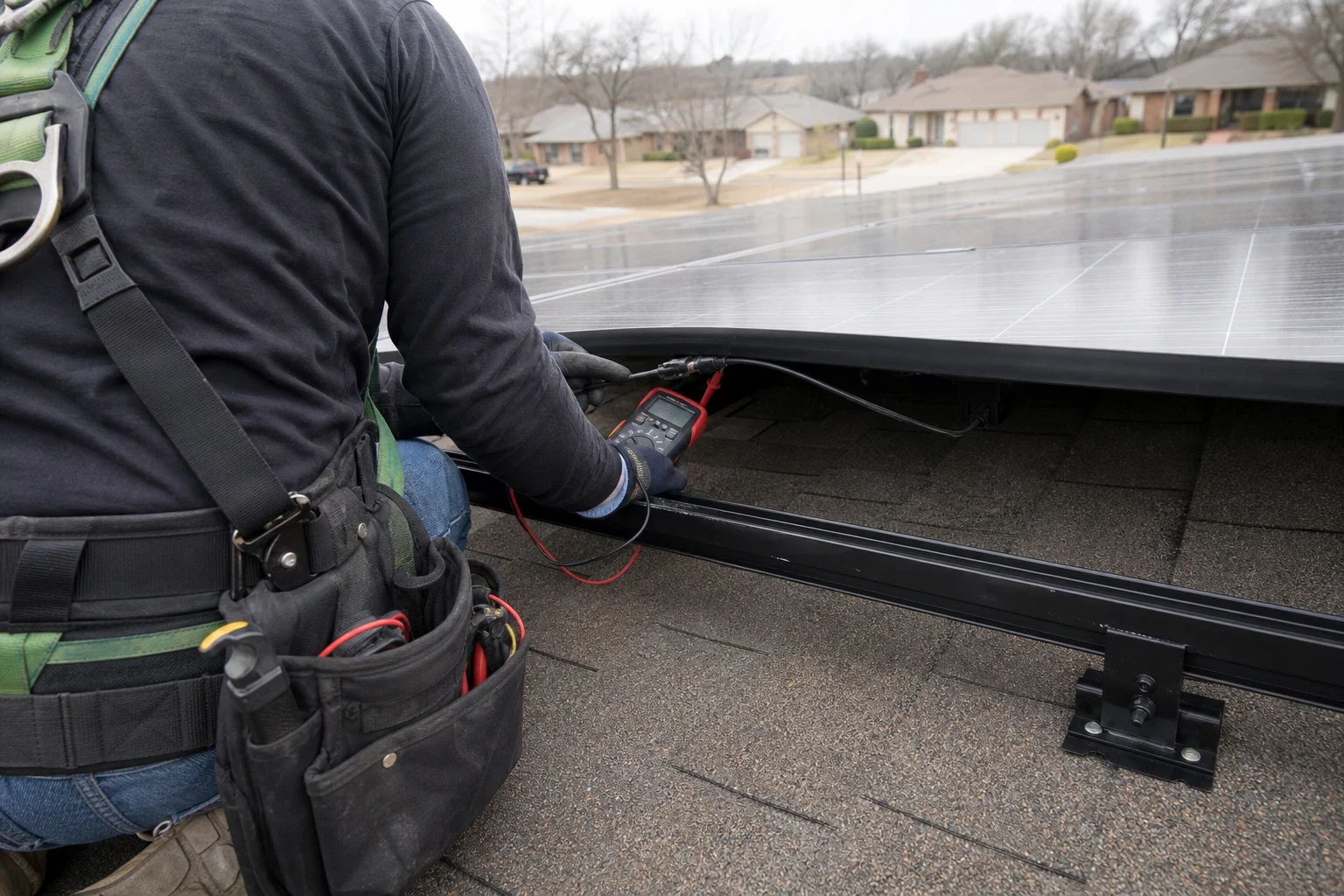
- We check open-circuit voltage and current on every string and compare them with what the panels ought to deliver. A low string usually comes down to a bad connector, a damaged cable or a weak panel.
- Wiring and critter damage
- We check the wiring beneath the panels for gnawed jackets, loose clips and wires lying on hot roofing. We replace and secure damaged runs, and we can fit mesh guards so animals stay out from under the array.
- Panel inspection
- We check for cracked glass, browned or blistered backsheets and hot spots. On systems without optimizers, one bad panel can pull down an entire string.
- Monitoring and communication fixes
- At times the system is working and only the monitoring has gone offline. We check the gateway, the Wi-Fi connection and the settings so your app shows real numbers again.
Signs your system needs a repair
Production fell and stayed down
A cloudy week lowers output. A drop that holds through clear, sunny days points to equipment, not weather.
An error light or code on the inverter
Red or amber lights and fault codes mean the inverter has shut down or limited output to protect itself. Write the code down or photograph it before you call.
One panel reads zero in the app
On microinverter or optimizer systems, a single dead panel usually means a failed module-level device or a disconnected cable.
The solar breaker keeps tripping
Repeated trips can come from a ground fault, a failing inverter or a loose connection that heats up. Leave it off and have it checked.
Visible damage after a storm
Cracked glass, a shifted panel or loose wires hanging below the array all need attention. North Texas hail can crack tempered glass without leaving any other visible damage on the house.
Monitoring went silent
No data for days may be a simple network issue, or it may mean the inverter lost power. Either way, it's worth checking.
What moves the cost of a repair
Repair costs depend mostly on which part failed and how hard it is to reach. A loose connector is a small job; a failed inverter out of warranty is a larger one. We explain each line on the estimate so you know what you're paying for.
The failed component
Connectors and cable are inexpensive parts. Inverters, optimizers and panels cost more, and matching an older panel model can take extra sourcing.
Manufacturer warranty status
If a panel or inverter is still under its manufacturer warranty, the part may be covered. We help you gather the serial numbers and test results the manufacturer asks for.
Access on the roof
A steep pitch, a two-story roofline or a fault in the middle of the array means more time removing and resetting panels to reach it.
How much damage spread
A chewed wire caught early is one repair. Left alone, it can lead to arcing or moisture damage in nearby connectors and modules.
How a repair call runs
- 1
A phone conversation first
You tell us the symptoms, the inverter brand and any error codes or monitoring screenshots. That often narrows the likely cause before we arrive and helps us bring the right parts.
- 2
On-site testing
We shut the system down safely using its disconnects and rapid shutdown, then test strings, connectors and the inverter. We work outside at your home and on the array, and we only open what's needed to find the fault.
- 3
Findings and a written estimate
We show you photos of what we found and explain the cause in plain English. You get a line-item estimate with repair and replacement options where both make sense.
- 4
Repair and verification
After you approve, we make the repair, restart the system and confirm each string and the inverter are producing as expected. We clean up wire scraps and old parts before we leave.
Solar repair questions
Do you repair systems another company installed?
Yes. Give us the panel and inverter brands by phone so we can check that parts are available. Plenty of installers have shut down or quit servicing older systems, and that equipment still needs a proper diagnosis.
Is it the inverter, or something else?
Often it is the inverter, since it works harder and runs hotter than the panels. Still, ground fault and isolation errors often trace back to damaged wiring earlier in the circuit. We test before we replace anything, so you do not buy an inverter you did not need.
Is your repair work covered by a warranty?
Our work comes with a 10-year workmanship warranty on solar. Panels and inverters have their own manufacturer warranties, apart from ours, and we explain which one covers your repair.
Should I repair an older system or replace it?
When the panels are in good shape and only the inverter has failed, repair usually makes sense. When several panels have degraded and the inverter is close to worn out, replacing more of the system may be worth more. We lay out both options and our reasons, and the choice is yours.
Will hail damage be covered by my homeowner's insurance?
Many policies pay for storm damage to a roof-mounted array, but the terms differ. We can record the damage with photos and test results for your claim. Your adjuster decides on coverage.
Find out what's wrong with your system
Have your inverter brand and any error codes ready when you call. We'll talk through the symptoms and set up a time to test the system at your home.